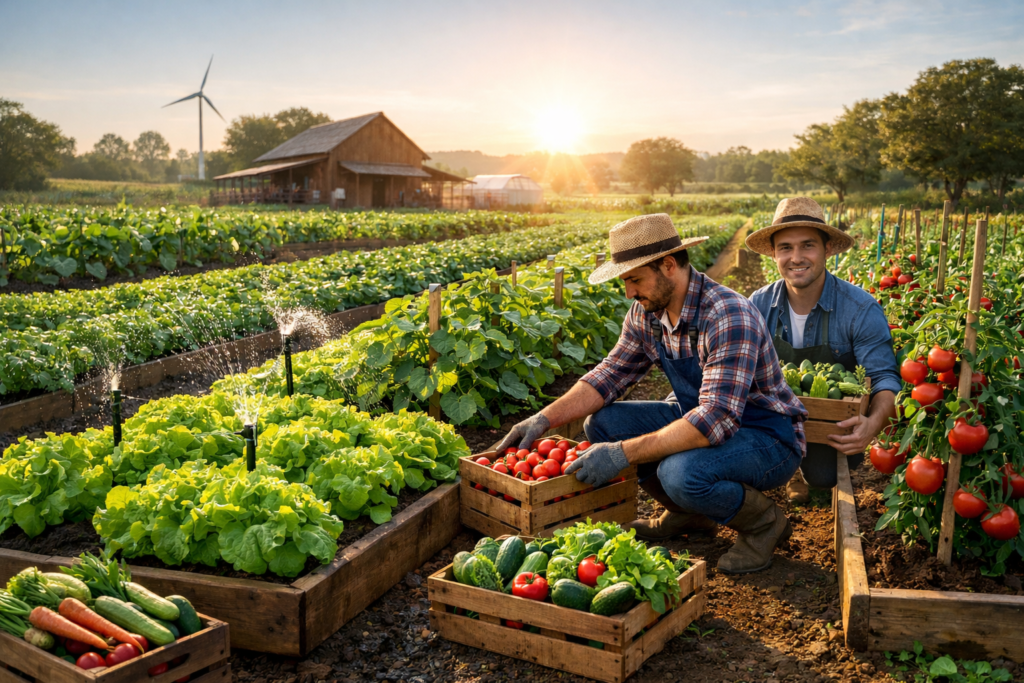
Producing Organic Vegetables (2025 Guide): Step-by-Step Methods to Increase Yield Up to 40%
Organic vegetable production is no longer a niche practice—it is a high-profit, sustainable farming system adopted worldwide. With rising demand for chemical-free food, organic vegetables now command 20–60% higher market prices compared to conventional produce.
This 2025 practical guide explains how to produce organic vegetables efficiently, reduce input costs, and maximize yields using certified organic methods.
What Is Organic Vegetable Production?
Organic vegetable production is a farming system that eliminates synthetic fertilizers, pesticides, GMOs, and growth regulators, relying instead on natural soil fertility, biological pest control, and ecological balance.
Core Principles of Organic Farming
- Soil health as the foundation of productivity
- Natural nutrient cycling
- Biodiversity and ecosystem protection
- Long-term sustainability over short-term yield spikes
Organic vegetable production is the cultivation of vegetables using natural inputs, biological pest control, and sustainable soil management without synthetic chemicals or GMOs.
Benefits of Producing Organic Vegetables
Organic farming offers economic, environmental, and health advantages, making it one of the fastest-growing agricultural sectors globally.
Key Benefits
- Higher profits: 20–60% premium pricing
- Lower long-term costs: reduced dependency on chemicals
- Improved soil fertility: higher organic matter
- Better health outcomes: no pesticide residues
- Export opportunities: high demand in USA, EU, and Canada
Step-by-Step Process to Produce Organic Vegetables
1. Soil Preparation & Fertility Management
Healthy soil is the backbone of organic farming. Start with soil testing to determine pH and nutrient status.
Best organic soil inputs include well-decomposed farmyard manure (8–10 tons per acre), vermicompost (1–2 tons per acre), green manure crops such as sunhemp or cowpea, and biofertilizers like Rhizobium and phosphate-solubilizing bacteria.
2. Selection of Organic Seeds
Always use certified organic seeds. If unavailable, untreated non-GMO seeds are acceptable under organic standards.
High-return organic vegetables include tomato, cucumber, spinach, okra, carrot, and capsicum.
3. Organic Pest & Disease Management
Instead of chemical pesticides, organic farming relies on preventive and biological control methods.
Effective organic pest control techniques include neem oil spray (3–5 ml per liter of water), Trichoderma for soil-borne diseases, yellow and blue sticky traps, and crop rotation with intercropping.
Proper pest management alone can reduce crop losses by up to 30%.
4. Weed Control Without Chemicals
Organic weed control focuses on manual and mechanical methods.
Best practices include mulching with straw, plastic, or dry leaves, hand weeding at early growth stages, and cover crops to suppress weed emergence.
Organic Vegetable Yield & Profitability (Per Acre)
Vegetable-wise performance data shows that tomatoes yield 8–10 tons per acre with net profits ranging from $2,500 to $4,000, cucumbers yield 6–8 tons per acre with profits of $2,000 to $3,500, and spinach yields 4–5 tons per acre with profits reaching $3,000 to $5,000, depending on market access and certification status.
Organic Certification: Why It Matters
Certified organic vegetables fetch significantly higher prices and allow access to export markets.
Major certification bodies include USDA Organic (USA), Canada Organic Regime (COR), and the National Programme for Organic Production (India).
The conversion period typically lasts 2–3 years, with annual inspections. Most farmers recover certification costs within one to two growing seasons through premium pricing.
Common Mistakes to Avoid in Organic Vegetable Farming
Frequent mistakes include skipping soil testing, overuse of raw manure, weak pest monitoring, ignoring crop rotation, and expecting instant high yields.
Organic farming is knowledge-intensive rather than input-intensive.
Future Scope of Organic Vegetables (2025–2030)
The global organic food market is projected to exceed USD 450 billion by 2030. Increasing government support, export incentives, and rising consumer awareness are driving sustained growth in organic vegetables.
Organic farming is now widely regarded as a long-term wealth-building agricultural practice.
Final Takeaway
Producing organic vegetables is profitable, sustainable, and future-proof. With proper soil management, biological pest control, and certification, farmers can achieve higher income with lower environmental impact.